President Mahama Visits Hohoe Flood Victims After Bridge Collapse
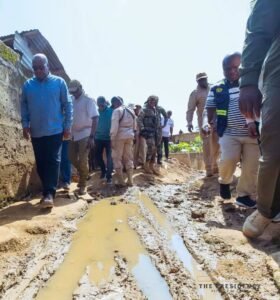
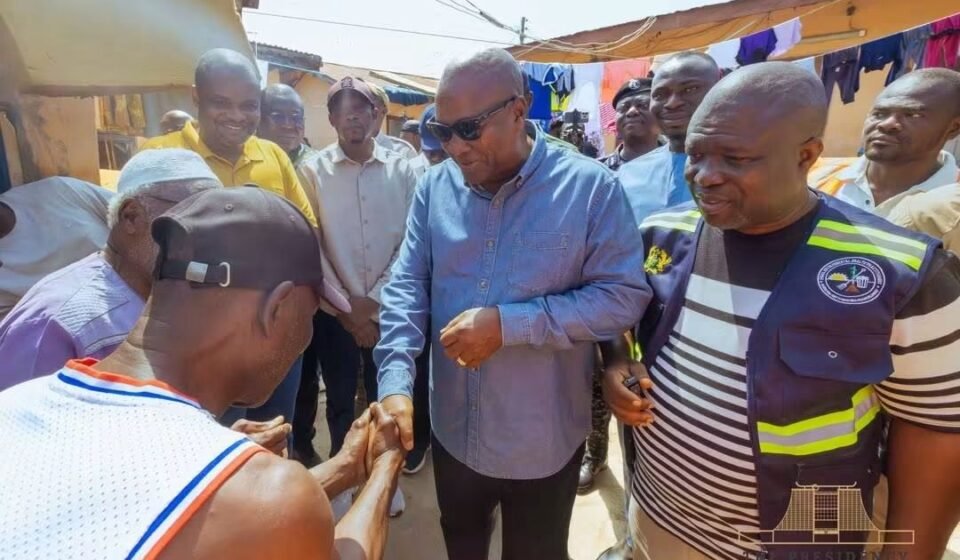
President John Dramani Mahama today, Friday, October 2, 2026, visited Hohoe in the Volta Region to commiserate with residents affected by severe flooding following the collapse of a bridge after heavy rains.
The President toured the flood-hit communities on the ground to assess the extent of damage and engage directly with affected families.
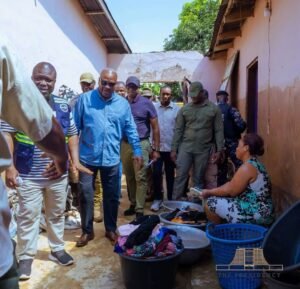
According to reports, the floods, which followed heavy rains on Monday, September 28, displaced several residents, destroyed homes and properties, and cut off livelihoods in parts of the municipality.
READ MORE: ‘I’m not referring to anybody’ – Mahama clarifies ‘annihilation’ remark after Trump’s speech
During the visit, President Mahama presented a major consignment of relief items to the victims, including food items, bedding, roofing sheets and other essential supplies. He assured residents that government will continue to mobilize support to alleviate their plight.
Reaffirming government’s commitment to stand with affected communities, President Mahama also announced additional private support to aid reconstruction.
“The owner of Dzata Cement who happens to be my younger brother has promised 5,000 bags of cement to help those affected,” President Mahama disclosed. He said the cement is intended to support the rebuilding of damaged homes.
READ MORE: President John Dramani Mahama walking on the streets of New York gets reaction
He also conveyed a message of sympathy from First Lady Lordina Mahama: “My wife, Lordina, extends her sympathies; when she heard of the flood, her first question was, ‘Has it affected my hospital?’”
Volta Regional Minister James Gunu, who had earlier announced the President’s visit on his Facebook page, expressed profound gratitude to the President for his swift response and personal presence in the region.
President Mahama urged the Regional and Municipal authorities to work closely with NADMO to ensure relief reaches all affected persons and that proper planning is put in place to prevent future flooding.